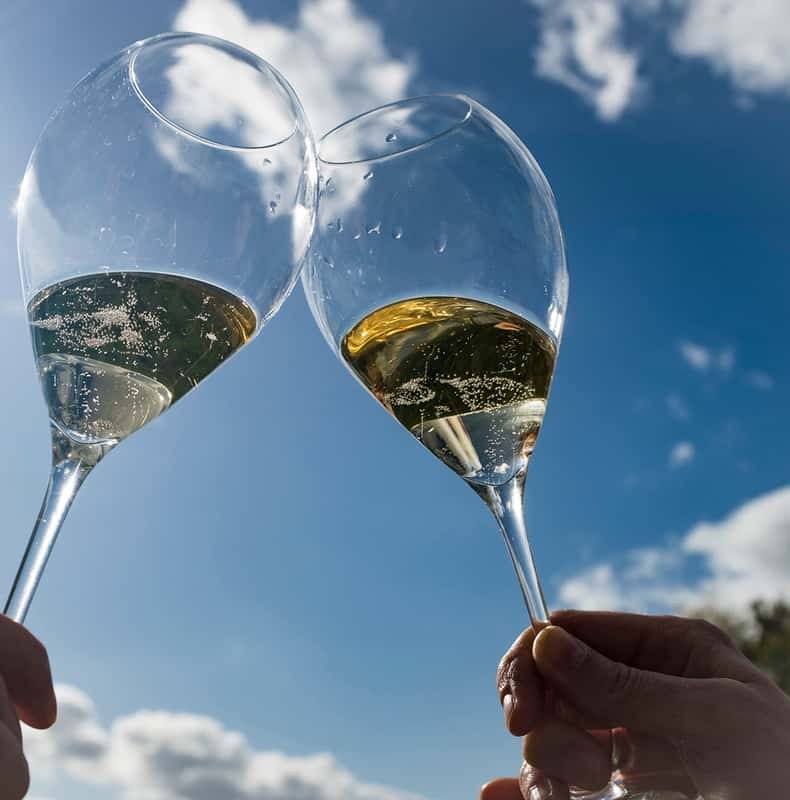
From Epernay : Bubble Champagne Tour 6 tastings
Three and a half hours from the Epernay tourist office: a grower's cellar in Oger, three champagnes, then ratafia, fine and marc in Cramant. No lunch.
From $189 per person
Check AvailabilityEpernay is one avenue, one museum and a ring of vineyard villages. You can walk the avenue in an afternoon for free, and the museum costs EUR 10. The villages are where an Epernay tour earns its fare, because someone else drives.
The Avenue de Champagne runs 1.5 km from the town centre. Since 2015 it has been part of the UNESCO listing, with Fort Chabrol, and 110 km of cellars lie under it. Start at the tourist office and walk east. These are the doors, in order:
| No. | What | What you can do |
|---|---|---|
| 7 | The tourist office | Where most tours meet; next to the Hôtel de Ville |
| 11 | Maison Belle Epoque | Perrier-Jouët's lunches and dinners, Tuesday to Saturday |
| 13 | Château Perrier | The Musée du Vin de Champagne; the park is free |
| 18 | Moët & Chandon | Cellar tours from EUR 48 |
| 25 | Esterlin | The avenue's only cooperative |
| 26 | Perrier-Jouët | Cellier Belle Epoque, tastings on the terrace |
| 33 | de Venoge | Tastings in the old stables |
| 46 | Boizel | Cellar tours and tasting workshops |
| 63 | de Castellane | The 66 m tower and the label room |
| 68 | Mercier | The driverless cellar train, from EUR 25 |
The walk is free, and so is the park at Château Perrier. The tourist office puts the avenue's cellars under 20 minutes' walk from the centre. Add the length of any cellar slot you book on the way.
What each house's visit costs is on champagne houses in Epernay.
Château Perrier was the home of a champagne merchant. It now holds the Musée du Vin de Champagne et d'Archéologie régionale, at 13 avenue de Champagne. The museum tells the story of the region from the chalk under your feet to the bottle.
| Season | Hours | Closed | Adult fare |
|---|---|---|---|
| 1 April to 31 October | 11:00–19:00 | Tuesdays | EUR 10 |
| 1 November to 31 March | 13:30–18:00; weekends 10:00–18:00 | Mondays and Tuesdays | EUR 10 |
| First Sunday of the month | As above | Free for everyone |
You can also walk in through the park, from the Parking des Arts on rue de Reims. The park opens every day, to 21:00 in summer and 20:00 in winter.
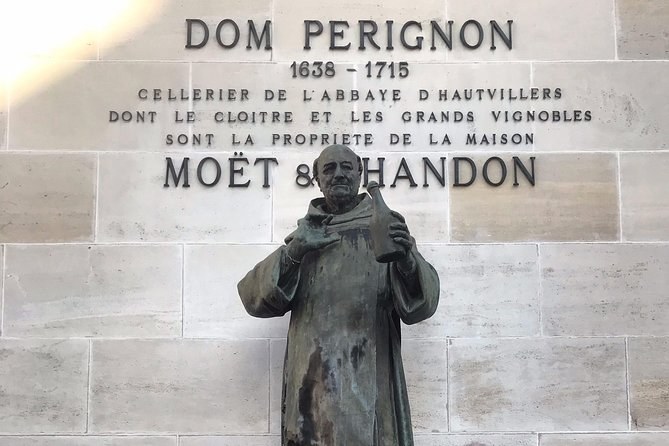
Hautvillers is 6 km north of Epernay, on the slope above the Marne. Its Benedictine abbey of Saint-Pierre was founded around 650. Dom Pierre Pérignon arrived in 1668, aged 29, and ran the abbey's property for 47 years until he died in 1715.
You can visit his tomb. It is in the choir of the church of Saint-Sindulphe, which is open all year. The abbey buildings are another matter: Pierre-Gabriel Chandon bought them in 1823, they belong to Moët & Chandon, and they are not open to visitors.
Most grower tours stop here. So if a listing says “visit the abbey”, read it as the church and the village streets.
The growers are in the villages, and each area grows something different:
East of Epernay, on the TER line to Reims. Their historic vineyards are in the UNESCO listing with Hautvillers. Mareuil-sur-Aÿ is now part of the commune of Aÿ-Champagne.
South-east, on the Côte des Blancs. Nicolas Feuillatte is in Chouilly. The grower tours taste in Oger and drive past Cramant.
Just south of Epernay. Vollereaux's cellar hour is at 48 rue Léon Bourgeois, and you make your own way there.
North, above the river. The church, the vine slopes and the view down the Marne valley. Almost every grower tour stops here.
The villages have no cellar you can walk to from the station. That is the part of the day a tour is for.
A tour takes you to the family growers in Aÿ, Oger and Hautvillers, with the tastings in the fare and nobody at your table driving.
Go underground. The cellars stay at 10 to 12 °C whatever the weather, and a house visit runs the same in rain or sun. The museum is indoors too, with its audio guide in the fare, so a wet day can be a full one.
The avenue's addresses come from the Epernay tourist office, the museum's hours and fares from its own site, and Hautvillers from its tourist office. The UNESCO details are the World Heritage Centre's.
Three and a half hours from the Epernay tourist office: a grower's cellar in Oger, three champagnes, then ratafia, fine and marc in Cramant. No lunch.
From $189 per person
Check Availability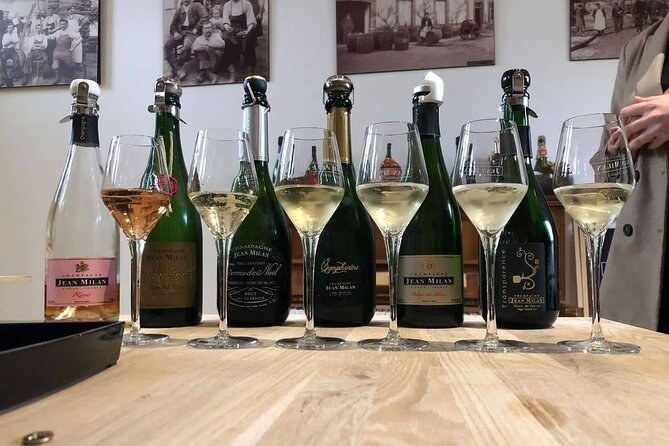
Three and a half hours with your own guide-chauffeur, ending with a family grower in Oger on the Côte des Blancs. Six champagnes and three spirits; two minimum.
From $333 per person, 2 minimum
Check Availability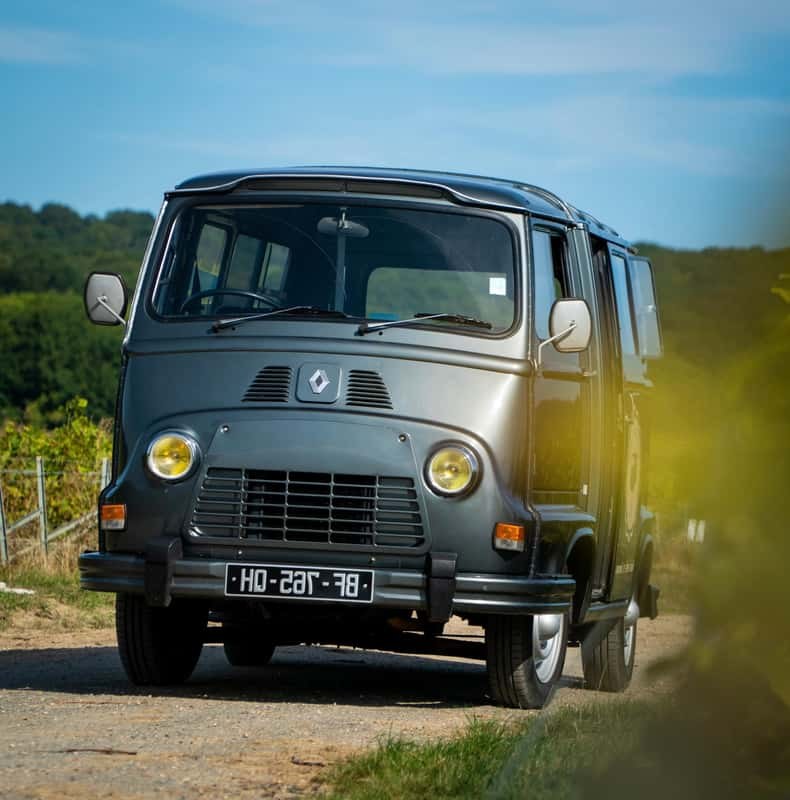
Two hours in a vintage Renault van to Aÿ and the slopes above the Marne, with champagne poured among the vines. Sabrage is EUR 15 extra.
From $57 per person
Check AvailabilityNext: see the house tours on champagne houses in Epernay, find each door on the Epernay map, or compare every tour on Epernay Tours.